
Worked cases & outputs
See what systems inquiry can produce.
Start with a recognisable situation. Compare accounts of it. Carry forward a clearer question and a responsible next step.
Public institutions · health & care
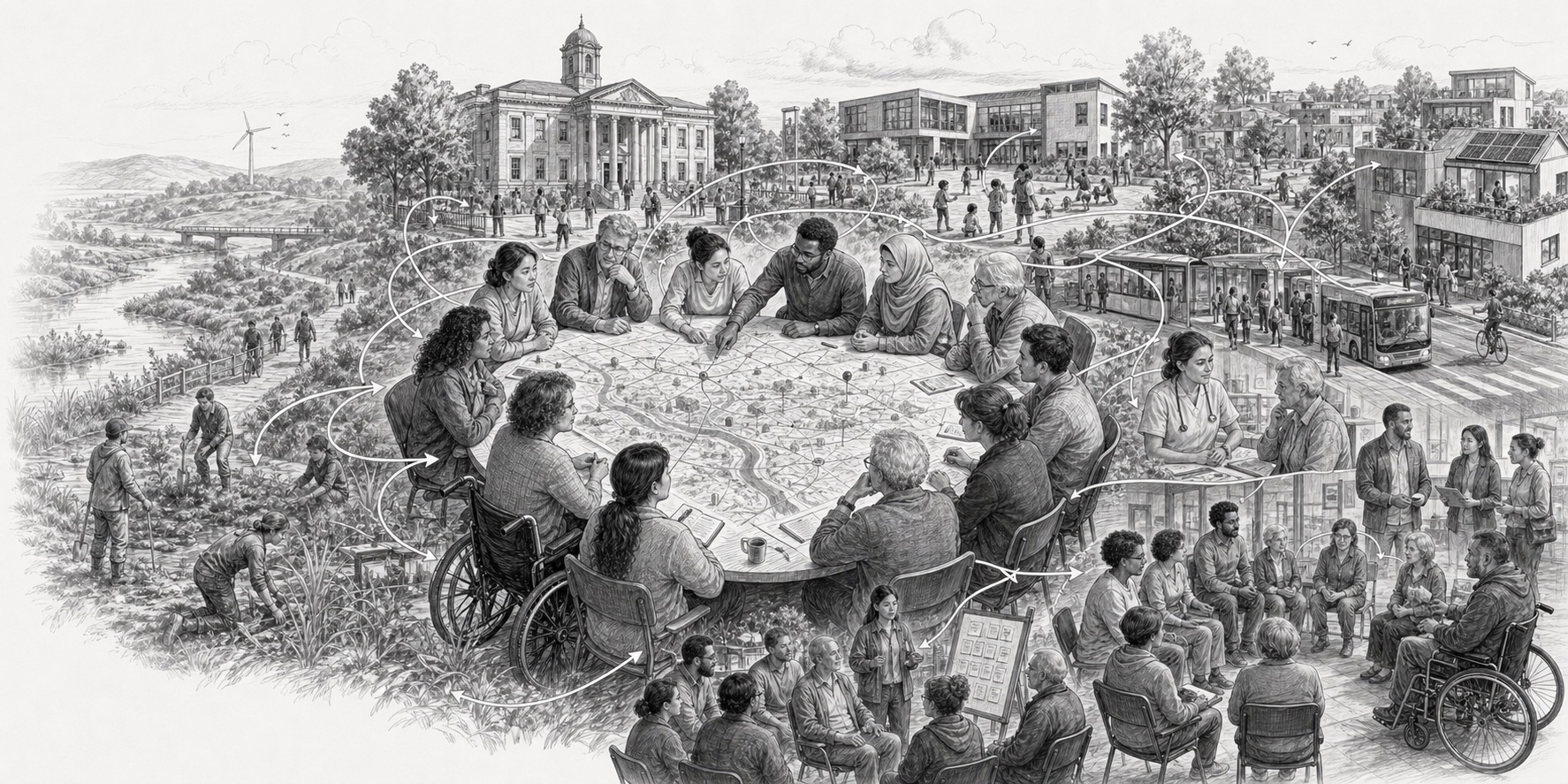
Linden Care 2035
How can a region improve continuity without shifting hidden work to families and frontline staff?
Compare regional coordination with residents’ access and lived experience. Neither account is the whole situation.
Outputs to explore
- Two competing rich pictures and their boundary choices
- Purposeful activities and questions for stakeholders
- Coordination needs and a learning-oriented response
Case status and evidence
Fictional teaching case
- Learning objective
- Compare different accounts of a situation, explain boundary choices and identify assumptions that require further inquiry.
- Method
- Rich pictures and perspective comparison, with optional purposeful inquiry and organisational viability review.
- Evaluation approach
- No completed evaluation is reported. In a facilitated pilot, starting and revised accounts could be reviewed using agreed criteria.
- Observed learning
- Not measured or reported. This is a fictional teaching case.
- Limitations
- The narrative and illustrations are constructed for learning. They do not establish real-world effectiveness, represent all affected groups or predict outcomes.
- Transfer potential
- Use the questions and comparison process in another setting, not the fictional conclusions. Revisit participants, boundaries and institutional constraints.
- Publication and consent
- Published as a fictional teaching example. No real participant testimony or client endorsement is implied. Any future learner-created material requires a separate publication decision and appropriate consent.
Companies · business-model innovation
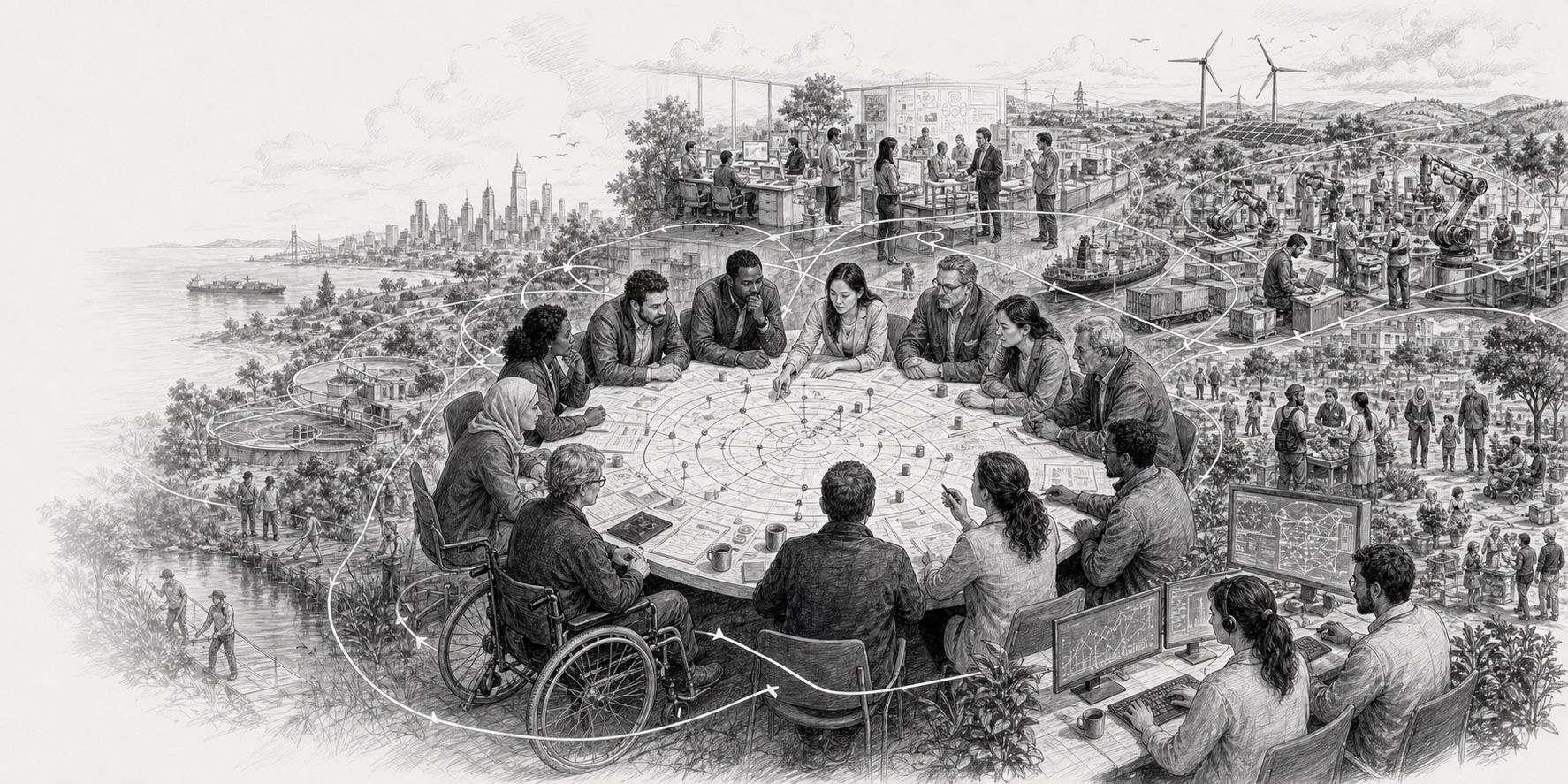
Nordwerk
What changes when an equipment maker sells reliable availability, rather than individual repairs?
Compare the commercial promise with the service organisation’s capacity to deliver. Explore information, responsibility and customer trust.
Outputs to explore
- A situation map showing promises and operational tensions
- Alternative value propositions and assumptions to test
- A viability review and a proportionate experiment
Case status and evidence
Fictional teaching case
- Learning objective
- Compare different accounts of a situation, explain boundary choices and identify assumptions that require further inquiry.
- Method
- Rich pictures and perspective comparison, with optional purposeful inquiry and organisational viability review.
- Evaluation approach
- No completed evaluation is reported. In a facilitated pilot, starting and revised accounts could be reviewed using agreed criteria.
- Observed learning
- Not measured or reported. This is a fictional teaching case.
- Limitations
- The narrative and illustrations are constructed for learning. They do not establish real-world effectiveness, represent all affected groups or predict outcomes.
- Transfer potential
- Use the questions and comparison process in another setting, not the fictional conclusions. Revisit participants, boundaries and institutional constraints.
- Publication and consent
- Published as a fictional teaching example. No real participant testimony or client endorsement is implied. Any future learner-created material requires a separate publication decision and appropriate consent.
Sustainability · cross-organisational change
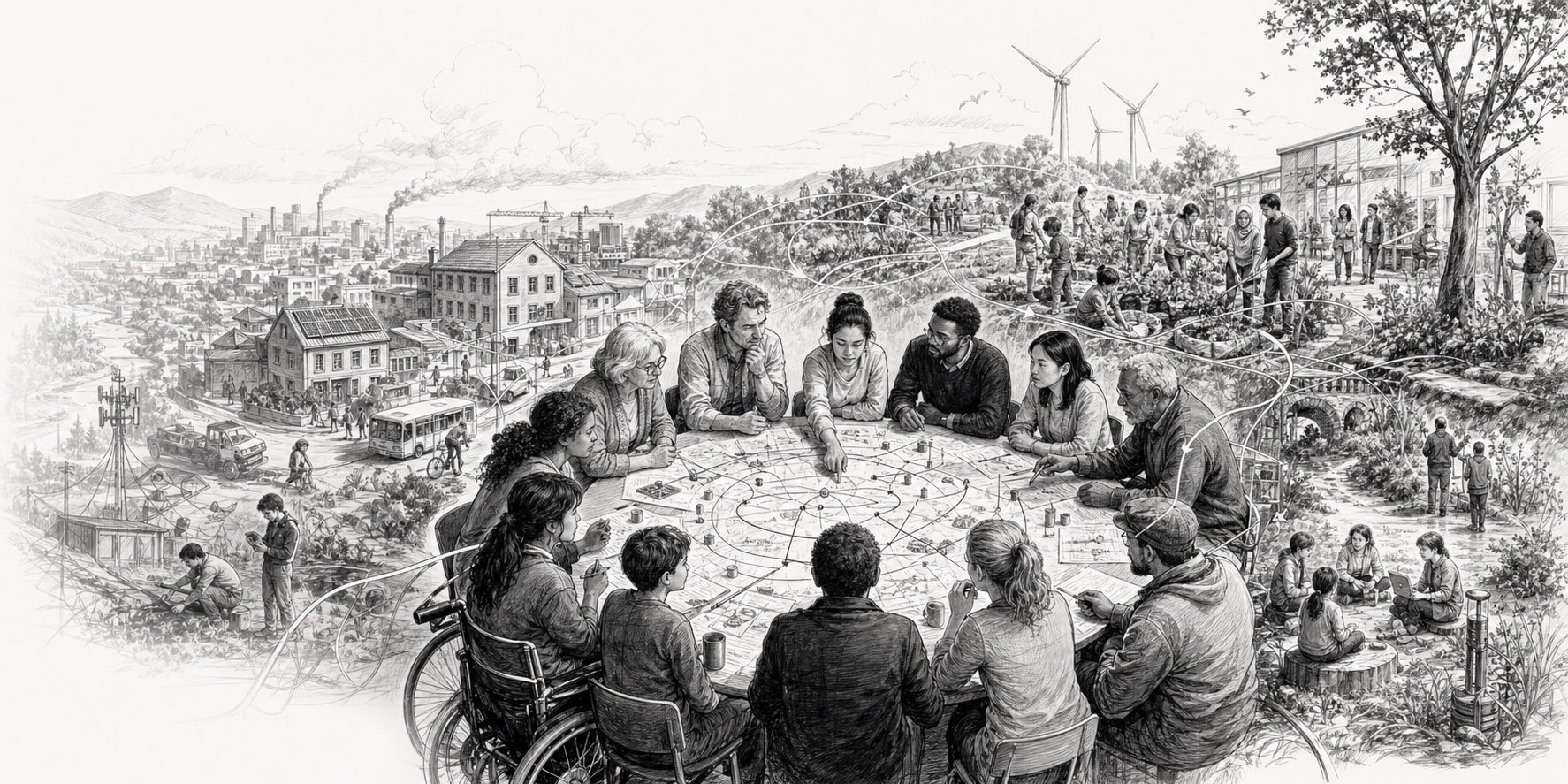
A regional reuse loop
What has to work together for reusable packaging to become a useful everyday service?
Compare customer convenience, retailer participation and the infrastructure needed to return, wash and redistribute packaging.
Outputs to explore
- Actors, resource movements and system boundaries
- Feedback hypotheses and possible displaced burdens
- Pilot questions and shared review responsibilities
Case status and evidence
Fictional teaching case
- Learning objective
- Compare different accounts of a situation, explain boundary choices and identify assumptions that require further inquiry.
- Method
- Rich pictures and perspective comparison, with optional purposeful inquiry and organisational viability review.
- Evaluation approach
- No completed evaluation is reported. In a facilitated pilot, starting and revised accounts could be reviewed using agreed criteria.
- Observed learning
- Not measured or reported. This is a fictional teaching case.
- Limitations
- The narrative and illustrations are constructed for learning. They do not establish real-world effectiveness, represent all affected groups or predict outcomes.
- Transfer potential
- Use the questions and comparison process in another setting, not the fictional conclusions. Revisit participants, boundaries and institutional constraints.
- Publication and consent
- Published as a fictional teaching example. No real participant testimony or client endorsement is implied. Any future learner-created material requires a separate publication decision and appropriate consent.
Your inquiry does not need every method.
A useful extract may contain a rich picture, an organisational viability review or a sequence of learning decisions. Agree the relevant scope first; retain assumptions and limitations alongside the outputs.
Discuss an example for your context →