

Life · idea · continuing relevance
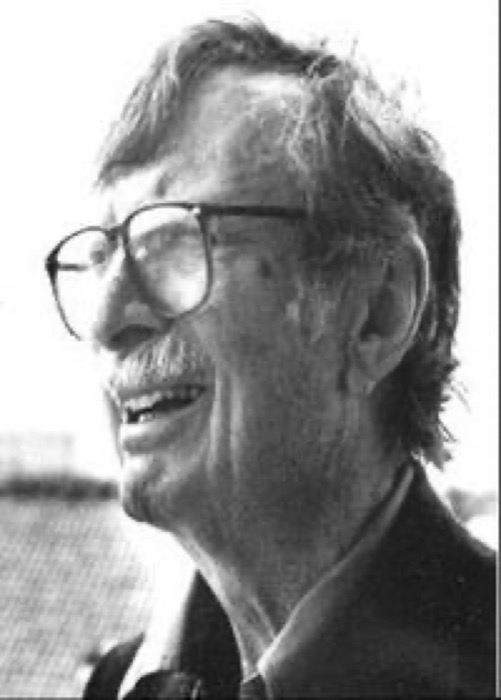
C. West Churchman
Philosopher · operations researcher · systems ethicist
01 · LIFE AND CONTEXT
The person behind the pattern.
C. West Churchman began in philosophy and became a leading figure in operations research and management science. His academic work repeatedly tested whether technical inquiry could remain honest about values, politics and those excluded from the room.
He treated systems practice as a moral undertaking: the analyst is responsible for the consequences of the boundaries and measures used.
02 · THE CENTRAL IDEA
What changed through this work?
Churchman’s ‘sweeping in’ asks inquiry to include more knowledge, perspectives and consequences before claiming a solution. Because completeness is impossible, the claim to comprehensiveness must itself remain open to challenge.
He used philosophical traditions as competing designs for inquiry, showing that facts depend on how evidence, authority and purpose are organised.
03 · WHY IT MATTERED
A contribution to systems practice.
Churchman made ethics constitutive of systems thinking. A technically effective design can still be systemically wrong if its burdens disappear beyond the chosen boundary.
Peripeteia perspective
Reading the idea for today.
For funding and impact measurement, his challenge is sharp: which effects are made visible by the indicator set, and which affected people lose standing when they cannot be counted easily?
TRY THE IDEASweep in another concern or stakeholder before claiming the analysis is complete.
This section is Peripeteia’s contemporary interpretation—not a quotation or a claim made on the thinker’s behalf.
Connections across the library
No idea develops alone.
Selected starting points
Read the thinker in their own voice.
Show sources and reading list
- The Systems Approach
- The Design of Inquiring Systems
- The Systems Approach and Its Enemies
Titles are a curated orientation, not a complete bibliography. This profile is an original editorial synthesis informed by the Systems Thinkers collection and additional historical context.