For public institutions, education and civil society

Public value is created across boundaries.

Peripeteia supports institutions facing contested goals, distributed responsibility and long time horizons—where formal rules, informal norms, public values, legitimacy and learning matter as much as technical efficiency.

Explore the contexts↓

Where complexity becomes practical

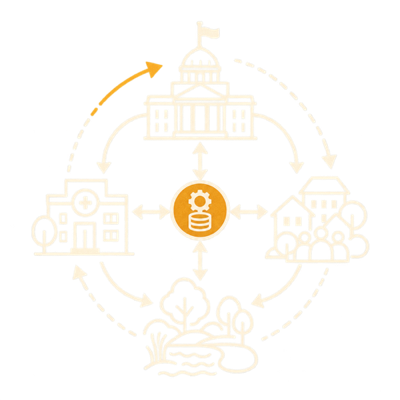
Institutions work inside systems they do not control.

Policy, education, environmental action and public services involve multiple mandates, levels of government, professions, communities and forms of evidence. Systems practice helps people coordinate without hiding disagreement or democratic accountability.

Peripeteia in practice ·public institutions, education and civil society

See the system behind the mandate.

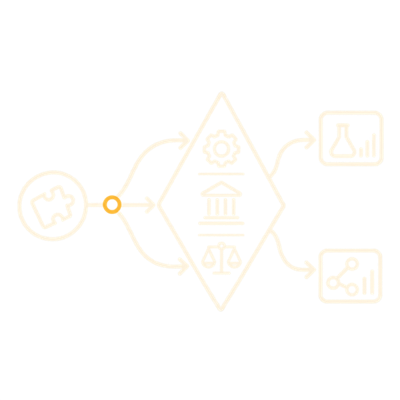
Choose a public challenge. The two Peripeteia lenses reveal how purposeful action, everyday interaction and formal and informal institutions combine to shape public outcomes.

Lens 01

Inquiry · Action · Interaction

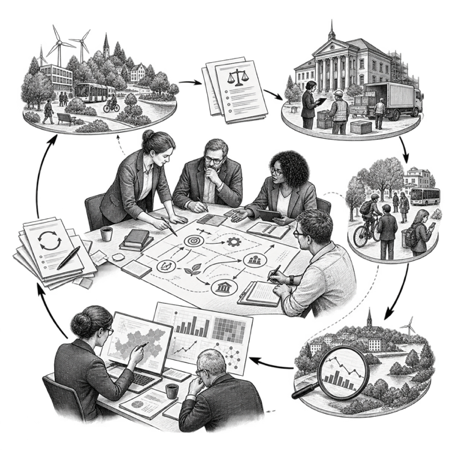
Capacity grows through a recurring practice, not a one-off diagnosis.

  1. Inquiry

    Ask how the policy meets existing incentives, professional judgement, local conditions and the coping strategies people already use.

  2. Action

    Test one implementation assumption with a local setting and define what would cause the policy design—not only delivery—to change.

  3. Interaction

    Interpret the evidence with policymakers, frontline professionals and affected communities before deciding what failure means.

Lens 02

The Institutional Lens

What keeps the current pattern legitimate, expected and repeatable?

Rule
Formal eligibility, funding and reporting requirements define what counts as legitimate delivery.
Norm
Frontline adaptations remain unofficial even when they make the service function.
Value
Consistency and accountability compete with responsiveness to place and person.
Belief
Implementation is the execution of policy rather than part of policy formation.
The systemic turn

The implementation gap is where policy is continuously remade—not merely where it goes wrong.

TRY THISAsk a frontline team which unofficial adaptation makes the policy workable and what that reveals about the original design.
01

Policy design & evaluation

Connect intended outcomes with implementation conditions, behavioural responses and consequences across time.

  • Policy symptoms return
  • Measures distort behaviour
  • Evaluation arrives after learning is useful

02

Cross-agency coordination

Clarify dependencies, decision rights, information flows and the coordination needed between autonomous units.

  • No actor owns the whole outcome
  • Cases move between organisational boundaries
  • Escalation substitutes for coordination
03

Public service transformation

Understand demand, capacity, access, workforce experience and unintended exclusion as one service system.
  • Backlogs recur
  • Digital channels shift work rather than remove it
  • Efficiency and accessibility conflict
04

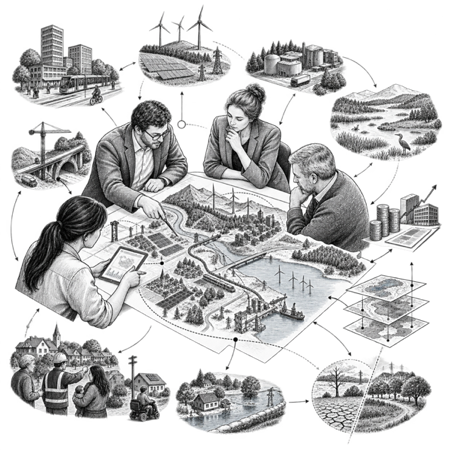
Climate & regional transition

Bring infrastructure, behaviour, ecosystems, investment, justice and place-based knowledge into a shared inquiry.

  • Benefits and burdens fall unevenly
  • Plans depend on actors outside the mandate
  • Long-term resilience loses to urgent pressure
05

Education and MINT/STEM

Build systems literacy through modelling, inquiry, evidence, ethical reflection and practical experimentation.
  • Subjects remain disconnected
  • Learners know facts but struggle with consequences
  • Technical solutions ignore social context
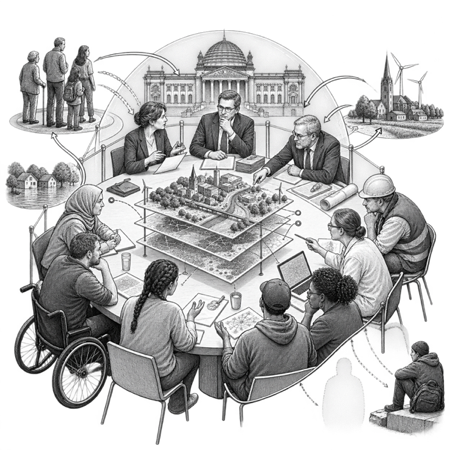
06

Participation & legitimacy

Examine who defines the problem, whose expertise counts and who is affected without meaningful influence.

  • Consultation occurs after choices are fixed
  • Affected groups distrust the process
  • Values are presented as technical facts

Ways to begin

Choose a starting format—or begin with the situation itself.

Indicative formats and durations. We agree participants, session time, preparation, accessibility needs and outputs together before an engagement begins.

01

3–6 weeks

Public-System Inquiry

A structured inquiry for a contested policy, service or place-based challenge.
What to expect: programme scope and learning evidence

Indicative planning guidance—not a fixed package or a claim of results. Confirm the scope and suitability together.

Who it is for
Public-service teams, relevant decision-makers and representatives of affected groups.
Situation or need
Understanding a challenge across organisational boundaries and identifying responsible, revisable next steps.
Duration
3–6 weeks; indicative and subject to an agreed schedule.
Delivery and group size
Facilitated in person, online or blended by agreement. As a starting planning range, consider 6–20 participants with smaller working groups; larger or specialist groups need an adapted facilitation plan.
Activities
Explore competing purposes, constraints, missing voices and cross-boundary responsibilities.
Tangible outputs
A shared account of disagreements, possible accommodations and questions for accountable action.
Intended learning
Explain a boundary choice, consider another perspective, distinguish claims from evidence and revise a proposed action when assumptions change.
Evaluation
Compare starting and closing reflections, discuss learner-created artefacts and invite feedback. Agree a later application review where proportionate. Attendance alone is not learning evidence.
Reuse
Agree facilitation notes, reusable prompts and permitted use of materials. Support an internal facilitator where relevant; do not assume rights to redistribute third-party content.
Access and inclusion
Offer non-drawing and paper alternatives, accessible text and supported participation. Discuss language, time, technology and representation barriers before delivery.
Agree with the partner
Purpose, participant selection, responsibilities, schedule, costs, accessibility, outputs, reuse permissions, consent, data handling and evaluation expectations.
How learning may be reviewed →
Discuss the fit →
02

Programme format

Systems & MINT Learning Lab

Interdisciplinary learning around feedback, modelling, evidence, uncertainty and responsible intervention.
What to expect: programme scope and learning evidence

Indicative planning guidance—not a fixed package or a claim of results. Confirm the scope and suitability together.

Who it is for
Educators and learners, with the level and format adapted to the group.
Situation or need
Connecting knowledge across disciplines and learning to question assumptions, boundaries and consequences.
Duration
Programme format; indicative and subject to an agreed schedule.
Delivery and group size
Facilitated in person, online or blended by agreement. As a starting planning range, consider 6–20 participants with smaller working groups; larger or specialist groups need an adapted facilitation plan.
Activities
Investigate a case, build and question a model, then reflect on the explanation.
Tangible outputs
Worked maps, learning prompts and a record of assumptions learners can revisit.
Intended learning
Explain a boundary choice, consider another perspective, distinguish claims from evidence and revise a proposed action when assumptions change.
Evaluation
Compare starting and closing reflections, discuss learner-created artefacts and invite feedback. Agree a later application review where proportionate. Attendance alone is not learning evidence.
Reuse
Agree facilitation notes, reusable prompts and permitted use of materials. Support an internal facilitator where relevant; do not assume rights to redistribute third-party content.
Access and inclusion
Offer non-drawing and paper alternatives, accessible text and supported participation. Discuss language, time, technology and representation barriers before delivery.
Agree with the partner
Purpose, participant selection, responsibilities, schedule, costs, accessibility, outputs, reuse permissions, consent, data handling and evaluation expectations.
How learning may be reviewed →
Discuss the fit →
03

Multi-session

Institutional Learning Partnership

A longer collaboration combining systems practice, educator or facilitator development and evaluation.
What to expect: programme scope and learning evidence

Indicative planning guidance—not a fixed package or a claim of results. Confirm the scope and suitability together.

Who it is for
Programme leads, educators or facilitators and participating teams.
Situation or need
Connecting knowledge across disciplines and learning to question assumptions, boundaries and consequences.
Duration
Multi-session; indicative and subject to an agreed schedule.
Delivery and group size
Facilitated in person, online or blended by agreement. As a starting planning range, consider 6–20 participants with smaller working groups; larger or specialist groups need an adapted facilitation plan.
Activities
Develop supported practice, review learning and adapt the approach to the institution.
Tangible outputs
Reusable learning activities, facilitation experience and an agreed approach to reviewing progress.
Intended learning
Explain a boundary choice, consider another perspective, distinguish claims from evidence and revise a proposed action when assumptions change.
Evaluation
Compare starting and closing reflections, discuss learner-created artefacts and invite feedback. Agree a later application review where proportionate. Attendance alone is not learning evidence.
Reuse
Agree facilitation notes, reusable prompts and permitted use of materials. Support an internal facilitator where relevant; do not assume rights to redistribute third-party content.
Access and inclusion
Offer non-drawing and paper alternatives, accessible text and supported participation. Discuss language, time, technology and representation barriers before delivery.
Agree with the partner
Purpose, participant selection, responsibilities, schedule, costs, accessibility, outputs, reuse permissions, consent, data handling and evaluation expectations.
How learning may be reviewed →
Discuss the fit →
04

30 minutes

First Exploratory Dialogue

A no-obligation first conversation to explore the situation, clarify what matters and decide whether—and how—a systems inquiry could help.Discuss the fit →
05

Open format

Open Enquiry

For situations that do not fit a predefined context. Bring the challenge in your own words and we will find a useful starting point together.Discuss the fit →

Use this today ·Reframe

Move the boundary before defending the answer.

List who benefits, who decides, whose knowledge counts and who carries consequences. Then compare the formal answer with the answer affected groups might give.

ASK NOWWho is part of the system in practice but outside the decision in procedure?
More everyday principles →

Begin with the situation

Bring us the challenge before deciding where the inquiry should begin.

Explore your challenge →Explore the Peripeteia Praxis →

Start a conversation

Bring the situation before choosing the solution.

Tell us what is happening, who is involved and what feels difficult to move. We will use the first conversation to understand whether a focused inquiry, learning format or longer partnership is useful.


Email
kontakt@peripeteia.de
WhatsApp
+49 171 2058188
First response
Usually within two working days
01 · Your starting point

Prepare a message here, then send it from your email app or WhatsApp. This form does not submit it directly. Fields marked with * are required.

Optional partnership details

Share what you know. No project specification is required. Please do not include sensitive personal or health information.

Preferred reply *

Contact