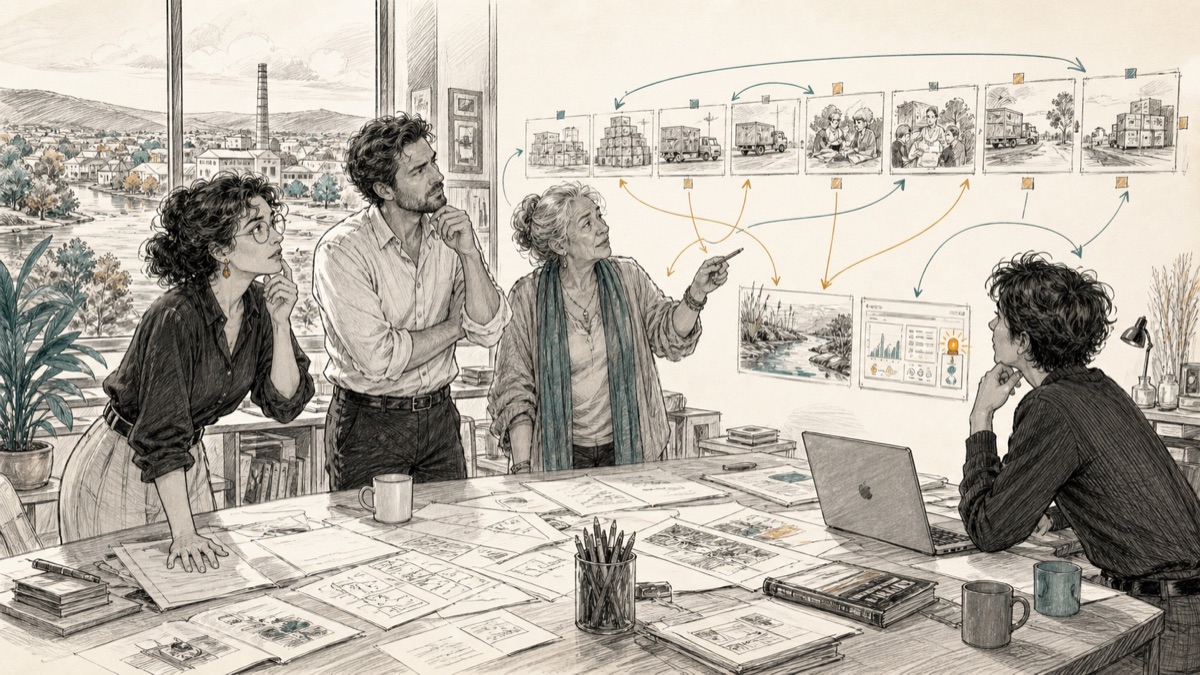
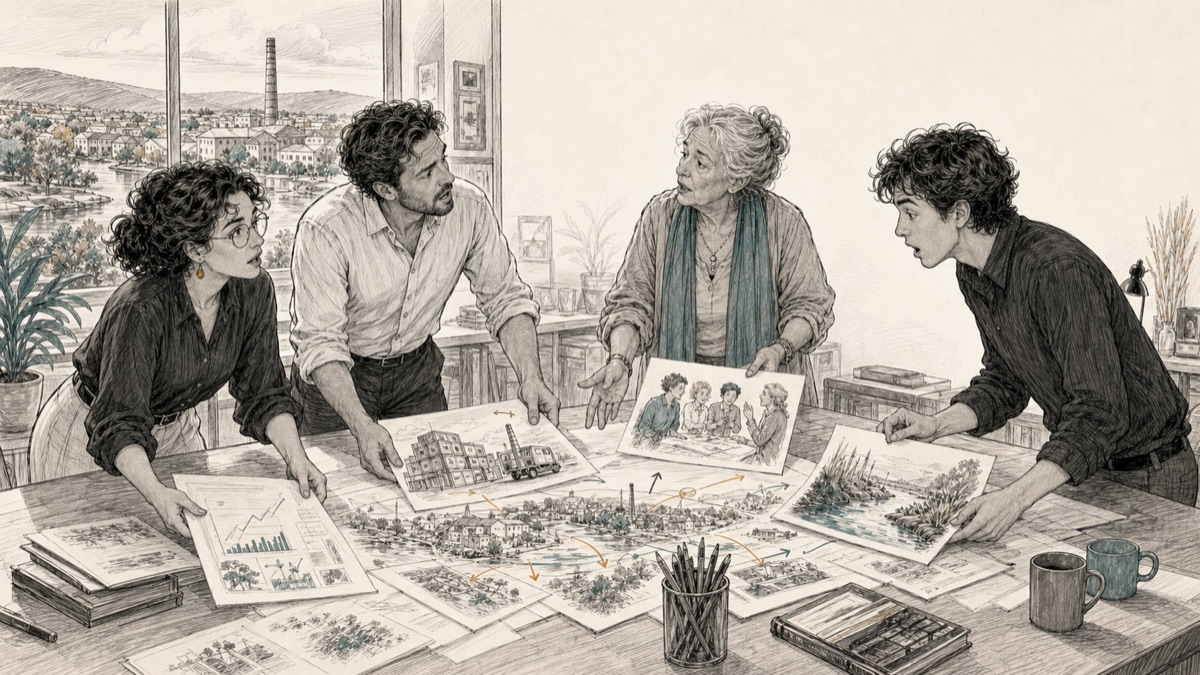
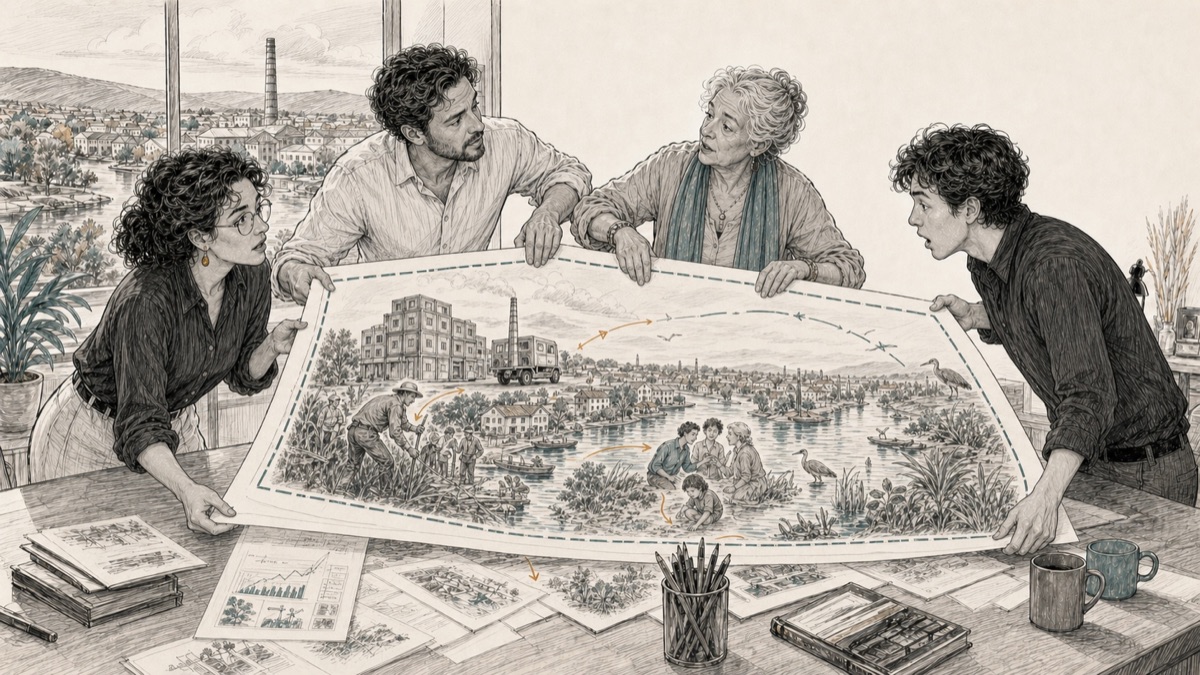
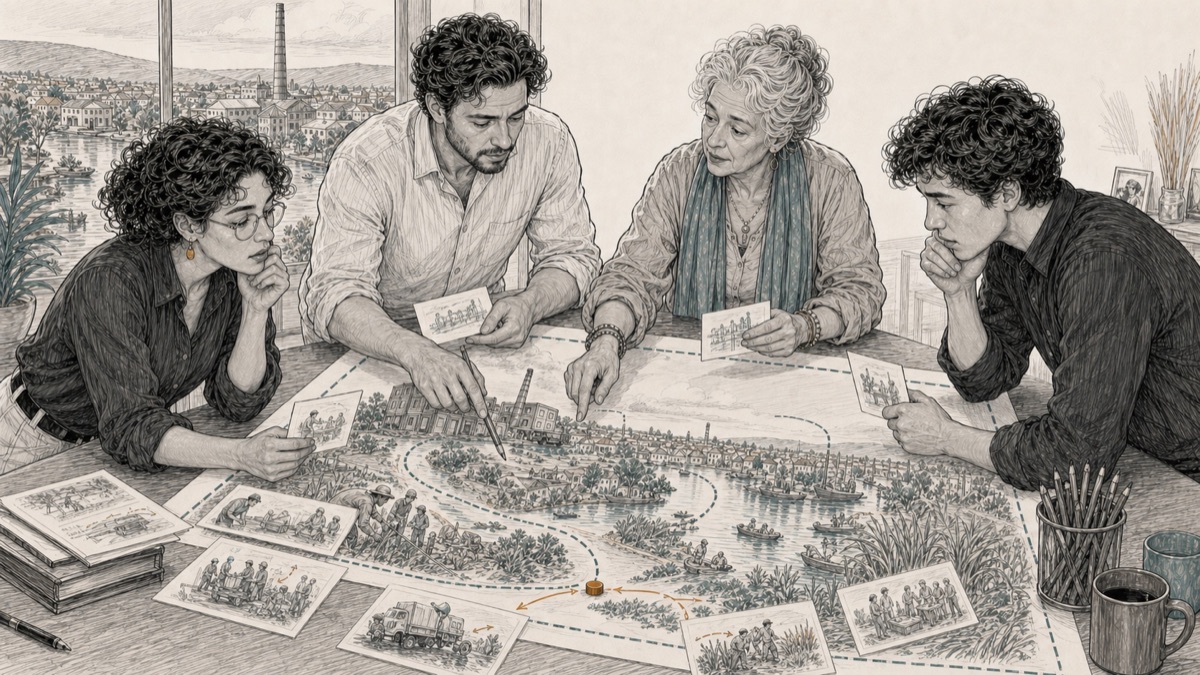
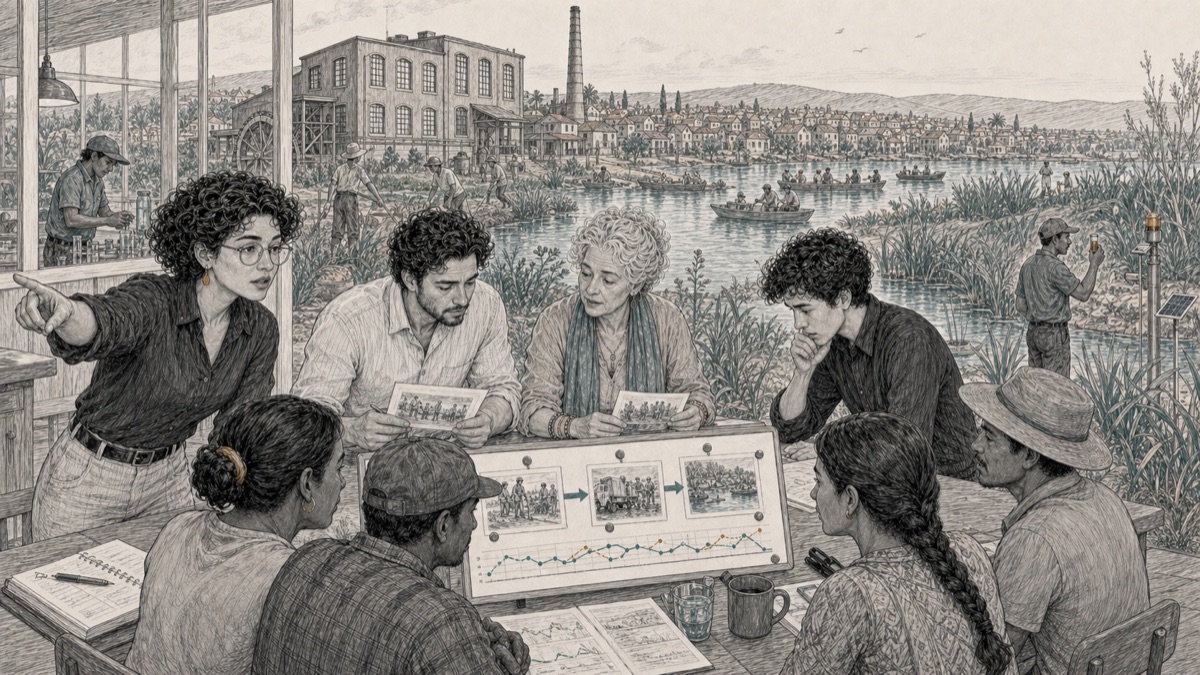
Reveal shifts attention from isolated events to the relationships, feedback, accumulations and delays that repeatedly produce them. The aim is not a complete model of reality, but a useful account of why the situation behaves as it does.
Useful when
- The same problem returns after each intervention
- Improvement in one area creates pressure elsewhere
- Consequences appear long after a decision
- Growth, workload or demand meets an unexpected limit
Possible outputs
- Pattern and timeline inquiry
- Causal relationship map
- Feedback and delay hypotheses
- Scenarios or policy experiments
Explore the foundations, capabilities and institutional questions
Philosophical rootAletheia is used here in its sense of unconcealment: allowing something previously obscured to come into view. It reminds us that inquiry begins by revealing—not by claiming certainty.
Systems lineageThis movement is grounded in dynamic modelling and feedback science: behaviour over time, stocks and flows, reinforcing and balancing feedback, delays and decision rules.
Capacity builtA habit of pausing, noticing change through time and making one’s account open to challenge.
Institutional questionWhich target, routine or category makes this pattern appear normal or inevitable?
USE IT TODAYBefore solving the event, trace what has been changing, what accumulates and how people respond.
Methodological discipline: Every model is a purposeful simplification. Its boundary, evidence and assumptions remain open to challenge.