

Life · idea · continuing relevance
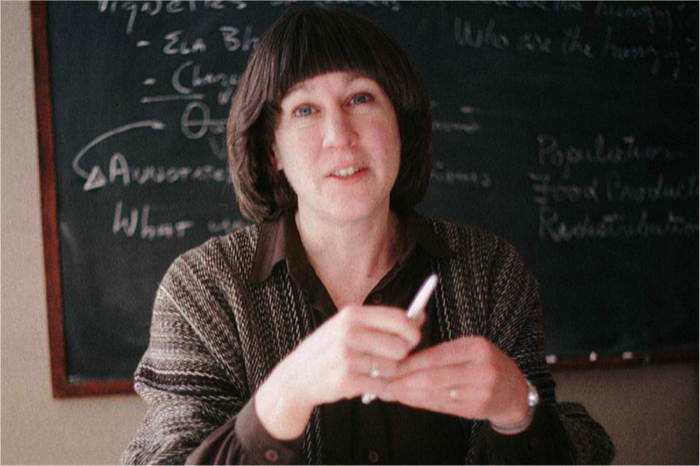
Donella Meadows
Environmental scientist · writer · systems educator
01 · LIFE AND CONTEXT
The person behind the pattern.
Donella Meadows trained in chemistry and biophysics before joining the MIT team whose World3 model informed The Limits to Growth. She later taught at Dartmouth, wrote a widely read newspaper column and helped build institutions experimenting with sustainable living.
Her gift was translation: she could move between rigorous dynamic structure, moral imagination and everyday language without flattening the complexity.
02 · THE CENTRAL IDEA
What changed through this work?
Meadows showed how growth, delay, finite stocks and feedback interact over long time horizons. Her leverage-points essay arranged interventions from changing parameters to changing goals and paradigms.
She also stressed that systems thinking is a practice of humility. Models are partial, surprises are inevitable and the capacity to learn matters more than the appearance of control.
03 · WHY IT MATTERED
A contribution to systems practice.
Meadows connected System Dynamics to ecological limits and public learning, making structure visible without losing questions of care, justice and purpose.
Peripeteia perspective
Reading the idea for today.
Her leverage hierarchy is most useful as an inquiry guide, not a ranking to apply mechanically. Before pursuing ‘deep leverage’, ask whether the people affected can participate in changing the system’s goals and rules.
TRY THE IDEALook for leverage in rules, information flows, goals and underlying assumptions—not only parameters.
This section is Peripeteia’s contemporary interpretation—not a quotation or a claim made on the thinker’s behalf.
Connections across the library
No idea develops alone.
Selected starting points
Read the thinker in their own voice.
Show sources and reading list
- The Limits to Growth
- Thinking in Systems
- Leverage Points: Places to Intervene in a System
Titles are a curated orientation, not a complete bibliography. This profile is an original editorial synthesis informed by the Systems Thinkers collection and additional historical context.