

Life · idea · continuing relevance
James Lovelock
Independent scientist · inventor · Earth-system thinker
01 · LIFE AND CONTEXT
The person behind the pattern.
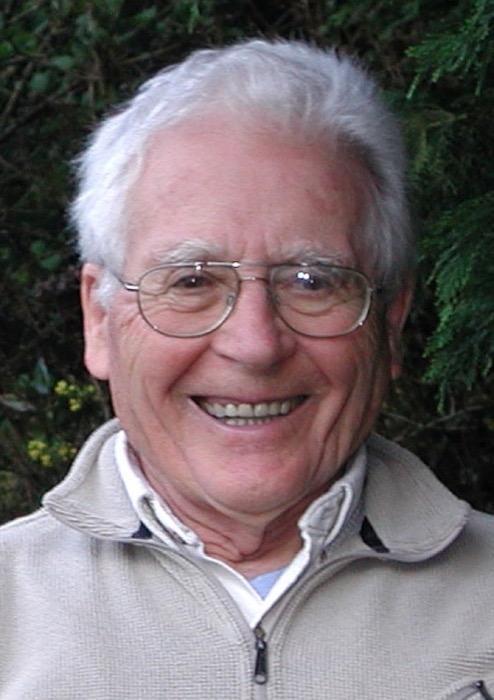
James Lovelock worked across medicine, atmospheric science and instrument design, including research connected with NASA’s search for life on Mars. As an independent scientist he developed the Gaia hypothesis, in important dialogue with microbiologist Lynn Margulis.
His career crossed institutional boundaries and often provoked debate about the relation between metaphor, model and scientific mechanism.
02 · THE CENTRAL IDEA
What changed through this work?
Gaia proposes that living organisms and the physical Earth participate in coupled feedback processes that can maintain conditions favourable to life. The claim concerns emergent regulation, not a planet acting with conscious purpose.
Models such as Daisyworld illustrated how local adaptation can produce global environmental effects without central coordination.
03 · WHY IT MATTERED
A contribution to systems practice.
Lovelock helped make Earth-system interdependence imaginable and stimulated research into the feedbacks linking atmosphere, climate and life.
Peripeteia perspective
Reading the idea for today.
Gaia thinking enlarges the decision boundary. A sustainability intervention should be tested for cross-scale feedbacks, while avoiding the comforting assumption that planetary regulation will automatically protect human societies.
TRY THE IDEAFollow interactions across scales before treating an environmental variable in isolation.
This section is Peripeteia’s contemporary interpretation—not a quotation or a claim made on the thinker’s behalf.
Connections across the library
No idea develops alone.
Selected starting points
Read the thinker in their own voice.
Show sources and reading list
- Gaia: A New Look at Life on Earth
- The Ages of Gaia
- Homage to Gaia
Titles are a curated orientation, not a complete bibliography. This profile is an original editorial synthesis informed by the Systems Thinkers collection and additional historical context.