
Life · idea · continuing relevance
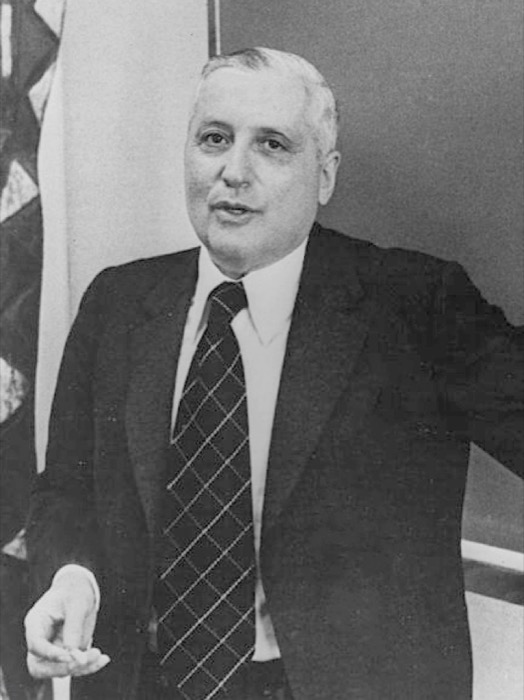
Ilya Prigogine
Physical chemist · Nobel laureate · theorist of irreversibility
01 · LIFE AND CONTEXT
The person behind the pattern.
Ilya Prigogine was born in Moscow, grew up in Belgium and built an international research career in physical chemistry. He received the 1977 Nobel Prize in Chemistry for work on non-equilibrium thermodynamics and dissipative structures.
His scientific and philosophical writing explored time, instability and the emergence of order in systems exchanging energy and matter with their surroundings.
02 · THE CENTRAL IDEA
What changed through this work?
Far from equilibrium, fluctuations can be amplified and stabilised into new organised patterns. Dissipation is not only loss; under specific conditions it participates in the creation of order.
Irreversibility and time are therefore fundamental to how many real systems develop, not imperfections to be averaged away.
03 · WHY IT MATTERED
A contribution to systems practice.
Prigogine provided a physical basis for emergence in open systems and changed how complexity thinkers understood instability and becoming.
Peripeteia perspective
Reading the idea for today.
Organisational metaphors must be used cautiously: a company is not a chemical reaction. Still, Prigogine invites leaders to distinguish destructive volatility from transition conditions in which small experiments can seed a new pattern.
TRY THE IDEATreat instability as information about possible reorganisation, not only as deviation to suppress.
This section is Peripeteia’s contemporary interpretation—not a quotation or a claim made on the thinker’s behalf.
Connections across the library
No idea develops alone.
Selected starting points
Read the thinker in their own voice.
Show sources and reading list
- Order Out of Chaos
- The End of Certainty
- From Being to Becoming
Titles are a curated orientation, not a complete bibliography. This profile is an original editorial synthesis informed by the Systems Thinkers collection and additional historical context.