
Life · idea · continuing relevance
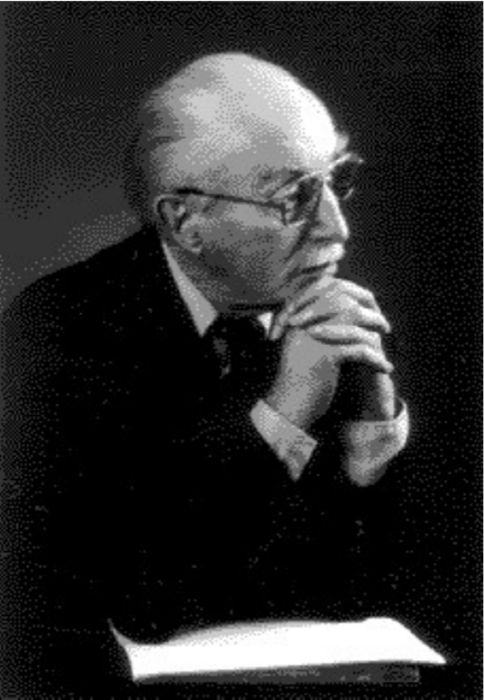
Eric Trist
Social scientist · Tavistock researcher · sociotechnical pioneer
01 · LIFE AND CONTEXT
The person behind the pattern.
Eric Trist helped shape the Tavistock Institute’s interdisciplinary tradition after wartime work with groups and organisations. Studies of British coal mining showed that technically rational redesign could undermine both social organisation and performance.
His later work extended from work groups to organisations operating in turbulent environments.
02 · THE CENTRAL IDEA
What changed through this work?
Sociotechnical systems theory holds that social and technical arrangements must be jointly optimised. A technology does not determine one best form of work; design choices distribute autonomy, skill and coordination.
The concept of the primary work group highlighted the capacity of semi-autonomous teams to regulate their own interdependent tasks.
03 · WHY IT MATTERED
A contribution to systems practice.
Trist changed work design by demonstrating that efficiency, dignity and adaptability are linked rather than competing afterthoughts.
Peripeteia perspective
Reading the idea for today.
In digital transformation, map whose discretion the technology removes or creates. If the social system cannot absorb exceptions, automation may increase hidden work while reducing learning.
TRY THE IDEAWhenever technology changes, redesign roles, relationships and learning at the same time.
This section is Peripeteia’s contemporary interpretation—not a quotation or a claim made on the thinker’s behalf.
Connections across the library
No idea develops alone.
Selected starting points
Read the thinker in their own voice.
Show sources and reading list
- Organizational Choice
- The Evolution of Socio-Technical Systems
- Towards a Social Ecology
Titles are a curated orientation, not a complete bibliography. This profile is an original editorial synthesis informed by the Systems Thinkers collection and additional historical context.