

Life · idea · continuing relevance
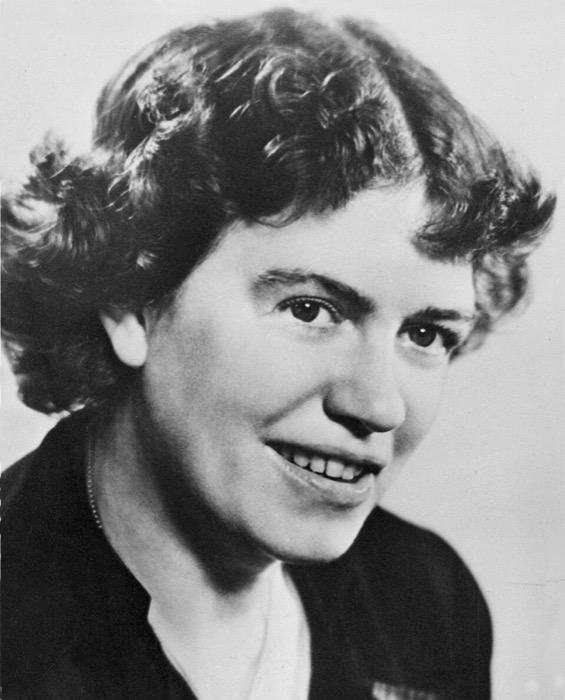
Margaret Mead
Anthropologist · public intellectual · cybernetics participant
01 · LIFE AND CONTEXT
The person behind the pattern.
Margaret Mead combined fieldwork, museum scholarship and unusually visible public engagement. Her studies of culture challenged the assumption that familiar social arrangements were natural or inevitable.
She participated in the Macy Conferences and later argued that cybernetics needed to reflect on its own language, observers and social consequences.
02 · THE CENTRAL IDEA
What changed through this work?
Mead made cultural comparison a method for seeing one’s own assumptions. Observation is never neutral: the observer enters a relationship, selects distinctions and affects what can be known.
Her work also treated culture as a learning system through which patterns are transmitted, contested and changed across generations.
03 · WHY IT MATTERED
A contribution to systems practice.
Mead widened cybernetics beyond machines and showed why reflexivity and cultural context belong inside any serious systems inquiry.
Peripeteia perspective
Reading the idea for today.
When an organisation calls a behaviour ‘resistance’, Mead invites a second question: resistance according to whose cultural expectations? Comparing contexts can reveal viable alternatives hidden by local normality.
TRY THE IDEAInclude the observer and the observation process in the account of the situation.
This section is Peripeteia’s contemporary interpretation—not a quotation or a claim made on the thinker’s behalf.
Connections across the library
No idea develops alone.
Selected starting points
Read the thinker in their own voice.
Show sources and reading list
- Coming of Age in Samoa
- Continuities in Cultural Evolution
- Culture and Commitment
Titles are a curated orientation, not a complete bibliography. This profile is an original editorial synthesis informed by the Systems Thinkers collection and additional historical context.