

Life · idea · continuing relevance
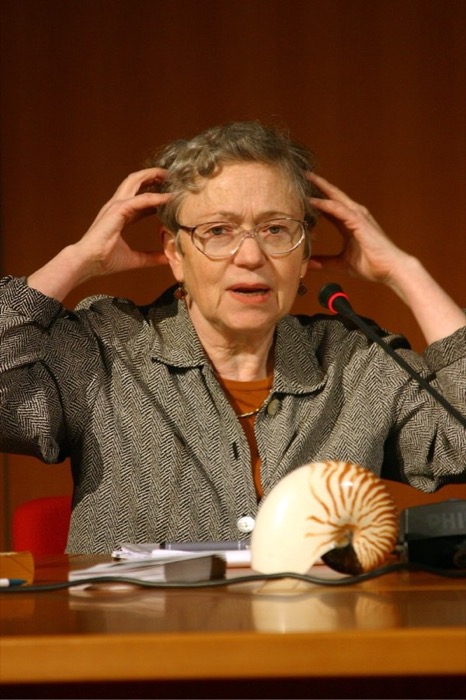
Mary Catherine Bateson
Anthropologist · linguist · writer on learning and improvisation
01 · LIFE AND CONTEXT
The person behind the pattern.
Mary Catherine Bateson grew up amid the anthropological and systems conversations of her parents, Margaret Mead and Gregory Bateson, but developed a distinct voice as a linguist, anthropologist and educator.
Her cross-cultural work and writing on women’s lives, ageing and learning treated disrupted pathways as sources of composition rather than evidence of failure.
02 · THE CENTRAL IDEA
What changed through this work?
Life can be understood as improvisational composition: people make continuity from interruptions by learning, revising and combining experiences. Adaptation is creative, relational and lifelong.
Peripheral vision—attention beyond the focal task—helps us notice context and possibilities that planned expertise misses.
03 · WHY IT MATTERED
A contribution to systems practice.
Bateson brought systems ideas into the texture of lived experience and made learning across difference central to human development.
Peripeteia perspective
Reading the idea for today.
Her work counters linear career and project narratives. In messy transitions, ask what existing fragments can be recomposed and which peripheral relationships already carry the next possibility.
TRY THE IDEATreat the capacity to continue learning as more durable than any fixed body of knowledge.
This section is Peripeteia’s contemporary interpretation—not a quotation or a claim made on the thinker’s behalf.
Connections across the library
No idea develops alone.
Selected starting points
Read the thinker in their own voice.
Show sources and reading list
- Composing a Life
- Peripheral Visions
- Willing to Learn
Titles are a curated orientation, not a complete bibliography. This profile is an original editorial synthesis informed by the Systems Thinkers collection and additional historical context.