

Life · idea · continuing relevance
Warren McCulloch
Neurophysiologist · philosopher · early cybernetician
01 · LIFE AND CONTEXT
The person behind the pattern.
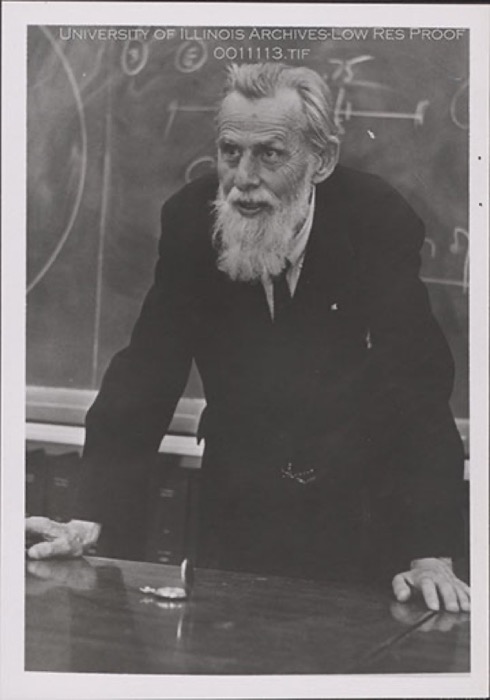
Warren McCulloch trained across philosophy, psychology and medicine before pursuing the organisation of the nervous system. He helped convene the Macy Conferences, where researchers from many disciplines formed the early cybernetics community.
His collaborations joined formal logic with experimental questions about brains, perception and purposeful behaviour.
02 · THE CENTRAL IDEA
What changed through this work?
With Walter Pitts, McCulloch showed how networks of idealised neurons could perform logical operations. The work became a conceptual ancestor of neural computation while also raising deeper questions about how knowledge is embodied.
He was interested in circular, self-referential organisation: a signal gains meaning through the network of relations in which it participates.
03 · WHY IT MATTERED
A contribution to systems practice.
McCulloch built bridges between physiology, logic and machines. He showed how simple local relations can produce capacities that no single unit possesses.
Peripeteia perspective
Reading the idea for today.
For organisations using AI, his work suggests a practical caution: do not confuse the behaviour of a network with the intention of a person. Examine architecture, training signals and feedback together.
TRY THE IDEATrace how signals and responses form a recurring circuit rather than a one-way cause.
This section is Peripeteia’s contemporary interpretation—not a quotation or a claim made on the thinker’s behalf.
Connections across the library
No idea develops alone.
Selected starting points
Read the thinker in their own voice.
Show sources and reading list
- Embodiments of Mind
- A Logical Calculus of the Ideas Immanent in Nervous Activity
- The Past of a Delusion
Titles are a curated orientation, not a complete bibliography. This profile is an original editorial synthesis informed by the Systems Thinkers collection and additional historical context.