

Life · idea · continuing relevance
W. Ross Ashby
Psychiatrist · theoretician of regulation · cybernetician
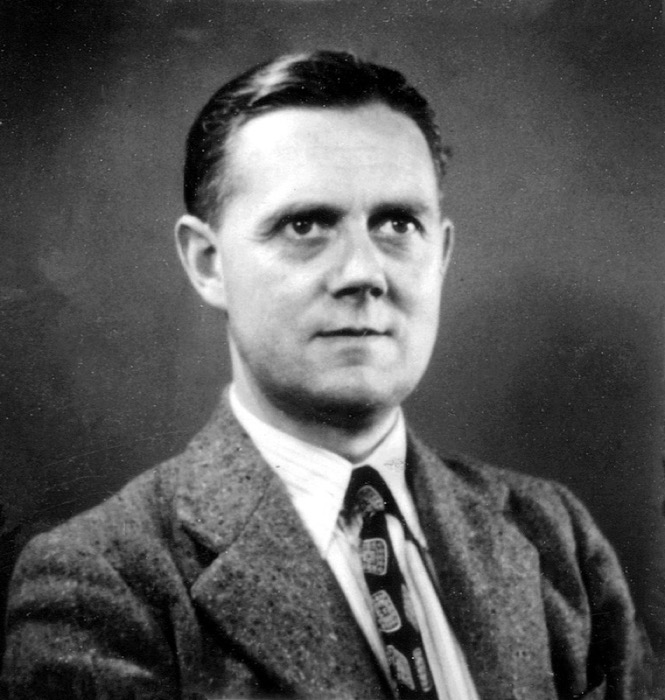
01 · LIFE AND CONTEXT
The person behind the pattern.
W. Ross Ashby worked as a psychiatrist and researcher while developing unusually rigorous ways to describe adaptation and stability. His homeostat—an electromechanical device that restored viable behaviour after disturbance—made self-regulation tangible.
He preferred precise concepts and operational demonstrations, helping cybernetics travel from metaphor into formal inquiry.
02 · THE CENTRAL IDEA
What changed through this work?
The law of requisite variety says, in essence, that only variety can absorb variety: a regulator needs a repertoire of responses adequate to the disturbances it must manage.
Ashby also distinguished what a system does from the material from which it is made, allowing similar organisational patterns to be compared across domains.
03 · WHY IT MATTERED
A contribution to systems practice.
Ashby gave managers and designers a durable explanation for why centralised control fails in environments that are more varied than the controller’s responses.
Peripeteia perspective
Reading the idea for today.
Requisite variety is not a demand for endless complexity. It directs attention to where variety should be amplified, where it can be attenuated and where local autonomy is safer than escalation.
TRY THE IDEAAsk whether the available responses are as varied as the situation being managed.
This section is Peripeteia’s contemporary interpretation—not a quotation or a claim made on the thinker’s behalf.
Connections across the library
No idea develops alone.
Selected starting points
Read the thinker in their own voice.
Show sources and reading list
- Design for a Brain
- An Introduction to Cybernetics
- Principles of the Self-Organizing System
Titles are a curated orientation, not a complete bibliography. This profile is an original editorial synthesis informed by the Systems Thinkers collection and additional historical context.